Executive Summary
Biohydrogen from wastewater: Wastewater contains energy in its organic matter, measured as COD. Most treatment plants already recover a share of this energy as methane through anaerobic digestion. A three-stage hybrid process, acidification followed by a microbial electrolysis cell (MEC) and then a conventional UASB digester, can additionally recover part of this energy as hydrogen, a cleaner and higher-value fuel.
On a representative example plant, 1,000 cubic metres per day at 5,000 mg/L COD, the hybrid process produces about 83 kilograms of hydrogen per day in addition to methane.
The total energy recovered is about 4% lower than a methane-only plant, but hydrogen converts to electricity far more efficiently in a fuel cell, so the hybrid process actually delivers about 9% more usable electricity.
The hybrid process needs higher capital investment, additional maintenance, and stricter hydrogen safety measures. Today it is best suited to pilot and demonstration projects rather than fully proven commercial installations.
1. Wastewater as an Energy Source
For decades, wastewater treatment has been viewed mainly as an environmental obligation, a process meant to remove pollutants before water is discharged or reused. While this remains its core purpose, wastewater is increasingly recognised as a source of recoverable resources, including energy, water, and nutrients.
The organic matter in wastewater carries significant chemical energy, commonly measured as Chemical Oxygen Demand (COD), the amount of oxygen required to oxidise the organic compounds present. In simple terms, COD indicates how much energy is stored in the wastewater’s biodegradable organic matter.
Traditionally, treatment plants have focused on removing this organic matter to meet environmental regulations. Modern plants increasingly aim to recover value from it before disposal, a shift that has given rise to the concept of the Water Resource Recovery Facility (WRRF), where wastewater is treated as a renewable resource rather than simply as waste.
Today, the most widely adopted method of energy recovery is anaerobic digestion, which converts part of the organic matter into methane rich biogas. The methane can generate electricity and heat, or be upgraded to biomethane as a renewable fuel. Thousands of municipal and industrial treatment plants worldwide already use this technology, making it a mature and commercially proven process.
Despite its success, conventional anaerobic digestion does not recover all the energy available in wastewater. A significant fraction remains in intermediate organic compounds or is lost during biological conversion. As global interest in renewable energy and the hydrogen economy grows, researchers have begun exploring ways to recover a greater share of this energy as hydrogen.
Hydrogen is attracting growing attention as a clean energy carrier with diverse applications. It can generate electricity in high efficiency fuel cells, serve as a feedstock for chemical industries, or replace fossil fuels in selected industrial processes. Recovering hydrogen directly from wastewater therefore offers a way to increase both the energy value and the economic return from existing treatment facilities.
The concept explored in this note is not to replace conventional methane production but to enhance it. By adding hydrogen recovery ahead of conventional anaerobic digestion, a plant can potentially produce both hydrogen and methane from the same organic load, two valuable renewable energy products, while still meeting the regulatory discharge standards the existing treatment process already achieves.
As wastewater treatment evolves from pollution control toward integrated resource recovery, technologies able to extract more value from the same stream will matter more. Biohydrogen production is one such opportunity. Although still at the pilot and demonstration stage, it offers a promising pathway to improve energy recovery, support decarbonisation, and turn wastewater treatment plants into renewable energy producers rather than energy consumers.
2. What Is Biohydrogen from Wastewater
Every wastewater treatment plant carries hidden energy in its organic matter, usually measured as COD. In most plants, this energy is recovered as methane through anaerobic digestion.
A newer approach recovers part of this energy as hydrogen instead. Hydrogen is a clean fuel with a high energy content per kilogram, and it can generate electricity more efficiently in a fuel cell than methane can in a gas engine.
Hydrogen produced from the organic matter in wastewater is called biohydrogen. Unlike green hydrogen, produced by splitting water using renewable electricity, or blue hydrogen, produced from natural gas with carbon capture, biohydrogen is generated directly from biodegradable organic matter. Because both the feedstock and the production process are different, biohydrogen is considered its own category of hydrogen.
Two main technologies are used to produce biohydrogen from wastewater:
- Dark Fermentation: a biological process carried out by naturally occurring bacteria.
- Microbial Electrolysis Cell (MEC): a process that combines biological activity with a small electrical input.
When used in sequence, these two technologies provide a practical way to recover hydrogen from industrial wastewater while still allowing the remaining organic matter to be converted into methane in a conventional anaerobic digester.
2.1 Why Hydrogen
Methane is already an effective energy source, but hydrogen offers several advantages. It produces only water when used in a fuel cell, converts energy to electricity more efficiently, and can also be used in chemical manufacturing or industrial fuel applications.
3. Two Engines of Biohydrogen
3.1 Dark Fermentation
Dark fermentation is a natural biological process that takes place without oxygen. Acid producing bacteria break down sugars and other easily biodegradable organic compounds, and the reactor is operated at a low pH so that the bacteria stop before producing methane.
As the bacteria digest the organic matter, they produce:
- Hydrogen gas
- Organic acids such as acetate and butyrate
No external electricity is required, since the bacteria provide all the energy the reaction needs. Dark fermentation works well with wastewater containing a high concentration of biodegradable organic matter, and it can also treat wastewater at relatively high loading rates.
The main limitation is that only a small portion of the available energy is converted into hydrogen. Most of the energy remains stored in the organic acids the process produces.
3.2 Microbial Electrolysis Cell (MEC)
A microbial electrolysis cell is an electrochemical reactor that uses bacteria together with a small electrical input to produce hydrogen. Inside the reactor, bacteria growing on the anode consume the organic acids produced during dark fermentation, and as they break these acids down they release electrons.
A small external voltage, much lower than that required for conventional water electrolysis, moves these electrons to the cathode, where they combine with hydrogen ions to produce hydrogen gas. Because of this electrical assistance, an MEC can produce three to four times more hydrogen per kilogram of COD than dark fermentation alone.
MECs perform best when fed wastewater rich in simple organic acids, which makes them an ideal second stage placed right after dark fermentation.
| Feature | Dark Fermentation | MEC |
| Driving force | Purely biological | Biological plus a small applied voltage |
| Typical hydrogen yield | 60 to 100 mL H2 per gram COD | 200 to 400 mL H2 per gram COD |
| Reactor throughput | High, comparable to standard high rate digesters | Low, limited by electrode surface area rather than reactor volume |
| Best feed | Raw, carbohydrate rich wastewater | Simple organic acids such as acetate |
| Maturity | Pilot to early demonstration | Laboratory to small pilot |
4. Why a Hybrid Makes Sense
Neither technology is sufficient on its own. Dark fermentation is fast and can treat large wastewater flows, but it converts only a small fraction of the available energy into hydrogen, with most of the energy remaining in the organic acids left behind. An MEC can recover much more hydrogen from these organic acids, but it cannot economically treat the entire wastewater flow, since its performance is limited by the available electrode surface area. Using both technologies in sequence lets each process do what it does best.
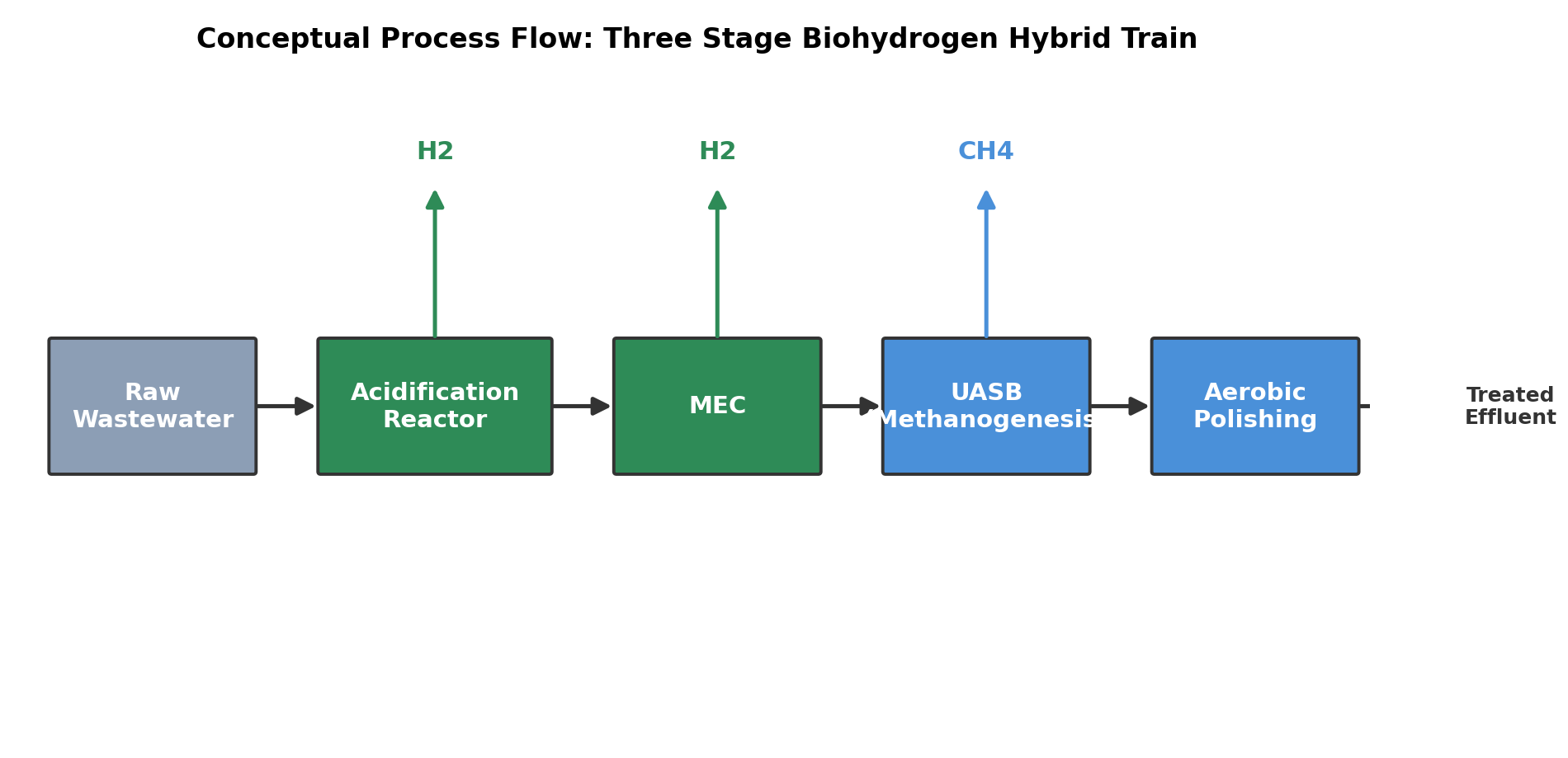
The wastewater passes through three stages:
- Acidification (dark fermentation): complex organic matter is converted into simple organic acids while producing the first portion of hydrogen.
- Microbial electrolysis cell: the organic acids are converted into additional hydrogen using a small electrical input.
- UASB digester: the remaining organic matter is converted into methane using conventional anaerobic digestion.
Any COD remaining after the UASB is removed in the plant’s existing aerobic treatment system before the treated water is discharged or reused.
This approach does not replace the conventional wastewater treatment process. Instead, it adds an extra hydrogen recovery step ahead of the existing anaerobic digestion stage, allowing the plant to recover more value from the same wastewater.
5. How Much COD Can Each Stage Handle
Each stage in the train has its own comfortable operating band, and the constraints behind each band are quite different.
| Stage | Comfortable COD range | Why this range applies |
| Acidification reactor | About 2,000 to 25,000 mg/L | Below this the acid forming bacteria are starved and grow too slowly; above it, acids build up faster than the system can buffer, and the pH crashes. |
| MEC | Works across a wide range, but current output plateaus once the anode surface is saturated | Hydrogen output depends on electrode surface area and on how well the wastewater conducts electricity, not on COD strength alone. Feeding it more COD than it can process is not harmful, the surplus simply passes through untouched to the next stage. |
| UASB (final polishing) | About 1,000 to 20,000 mg/L | Below this the granular sludge blanket that does the digestion can break down over time; above it, methane forming bacteria can be overwhelmed by acids or ammonia. |
The acidification reactor and the UASB must operate within their preferred COD ranges to stay stable. The MEC is more flexible, since it is limited by available electrode surface area rather than by COD concentration. If more COD enters the MEC than it can process, the excess is not wasted, it simply passes to the UASB, where it is converted into methane. Because of this, the process does not require dilution or recycle loops between the stages, the designer only needs to size the MEC correctly for the fraction of COD it should process.
6. A Worked Example
Consider an industrial wastewater treatment plant with the following characteristics:
- Flow: 1,000 cubic metres per day
- Influent COD: 5,000 mg/L
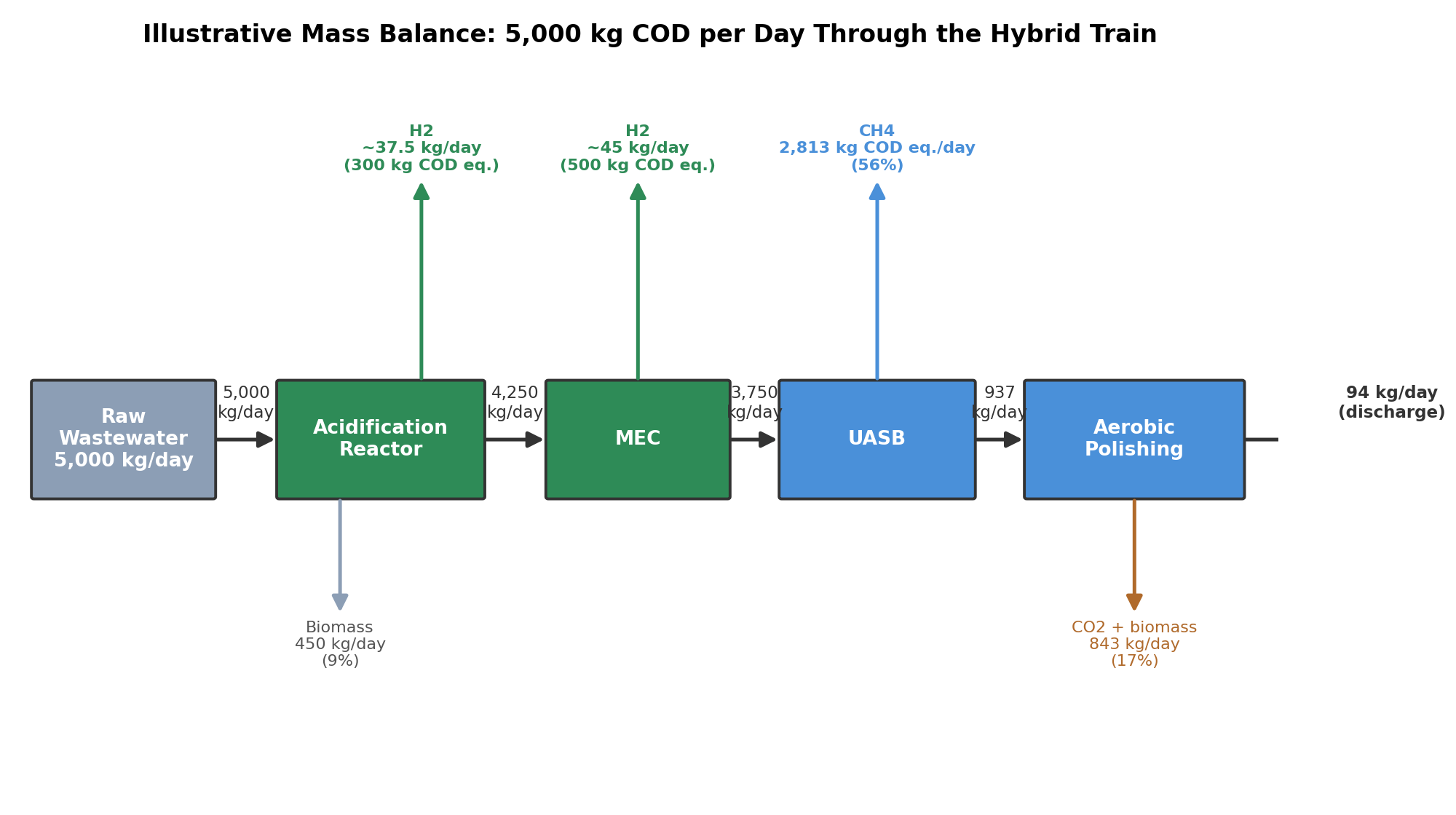
This corresponds to a total organic load of 5,000 kilograms of COD per day entering the treatment system.
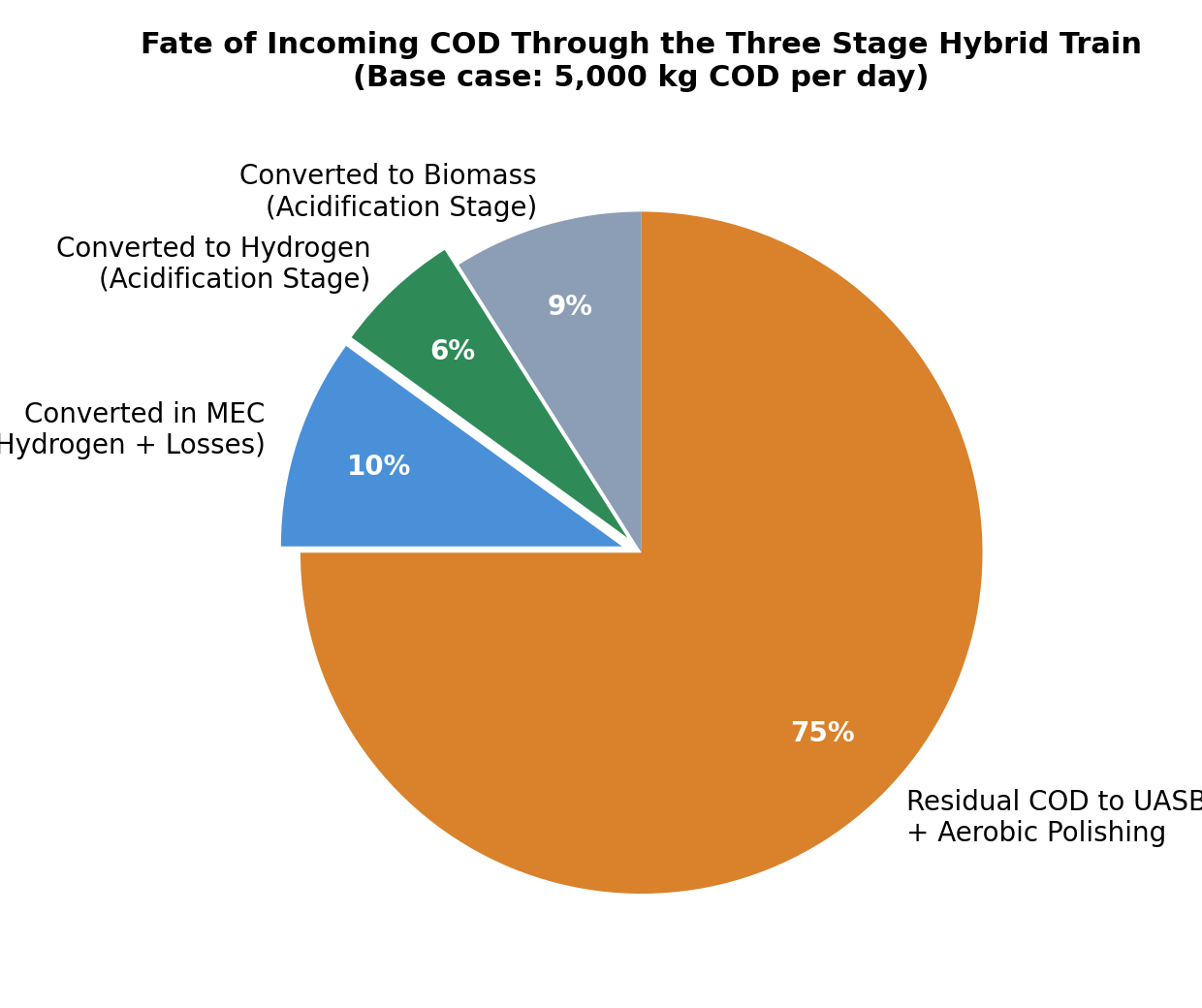
| Stream | COD (kg per day) | Share of feed |
| Incoming wastewater | 5,000 | 100% |
| Converted to biomass in acidification | 450 | 9% |
| Converted to hydrogen in acidification | 300 | 6% |
| Converted in the MEC (hydrogen plus losses) | 500 | 10% |
| Residual COD passed to UASB and aerobic polishing | 3,750 | 75% |
Carrying the balance through to discharge, the UASB removes most of the remaining COD as methane, and the final aerobic polishing step handles what is left, so the plant still ends with a compliant, low COD effluent, exactly as a conventional plant would.
For this example, the hybrid system produces approximately:
- Hydrogen: 83 kg per day
- Hydrogen volume: 917 Nm3 per day
- Hydrogen energy content: 2,767 kWh per day
Three quarters of the original COD load, 3,750 kilograms per day, still moves on to the UASB stage and then aerobic polishing before it can be safely discharged or reused. This is the part of the design that matters most for a bankable proposal: recovering hydrogen does not shorten or replace the treatment train a plant already needs, it adds an energy recovery step ahead of it.
7. Is the Trade Worth It
A fair comparison is between a conventional plant, where all COD is converted into methane, and a hybrid plant, where part of the COD is converted into hydrogen before the remaining COD is converted into methane.
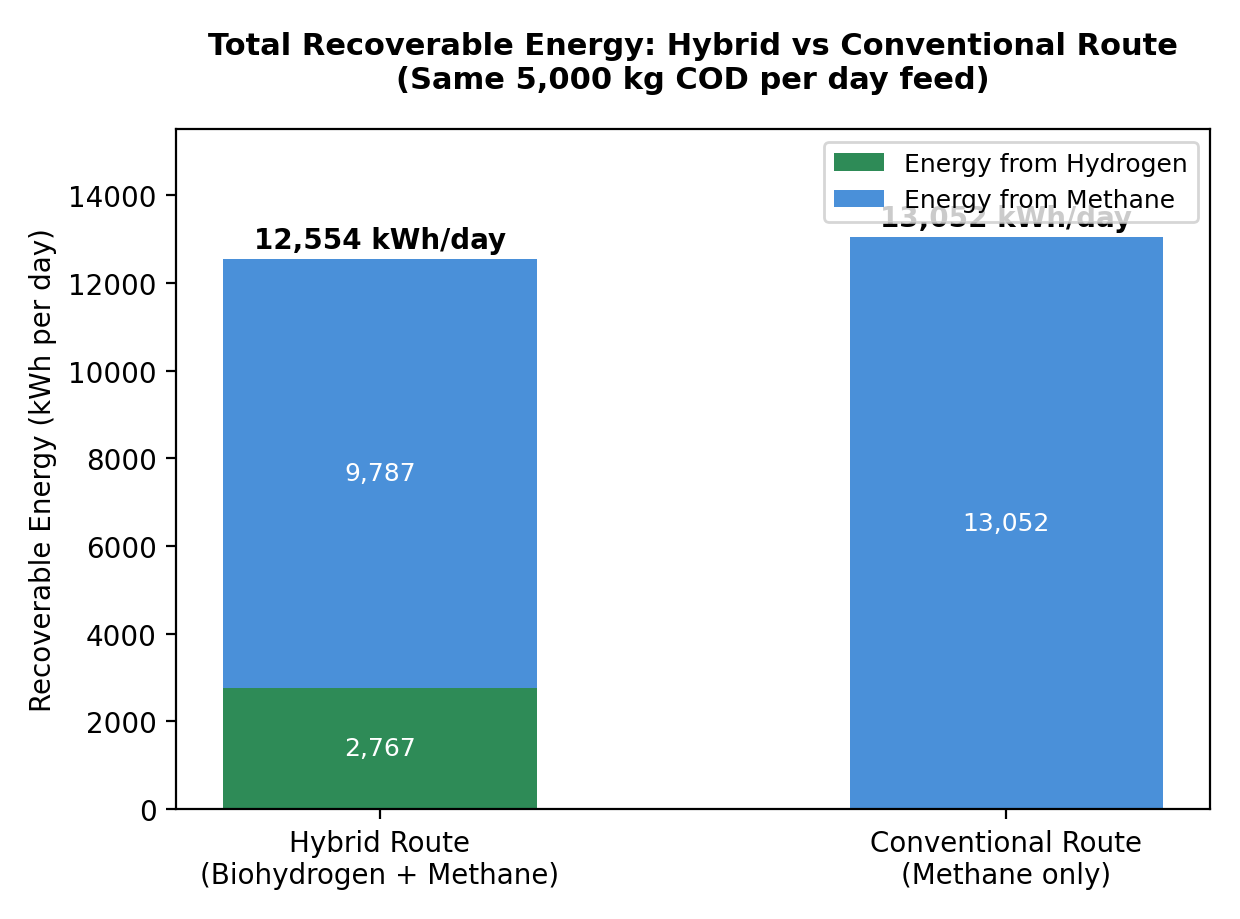
At first glance, the hybrid process appears to recover slightly less total energy. However, the quality of the recovered energy is higher.
About 22 % of the recovered energy is now available as hydrogen instead of methane. Hydrogen can generate electricity in a fuel cell at around 60 % efficiency, compared with 33 to 35 % efficiency for conventional combustion based generation, and typically 35 to 40 % for methane fired generator sets specifically.
As a result, the hybrid process delivers more usable electricity, even though the total energy recovered is slightly lower. The plant also now produces two marketable energy products, hydrogen and methane, instead of only methane, which creates operational flexibility and lets the operator target higher value energy markets where hydrogen demand exists.
A second useful comparison is how much external electrical energy each hydrogen generating route needs to produce a given amount of hydrogen, since this determines whether a technology is a net energy source or a net energy consumer.
| Route | External electricity needed per kg H2 | Where the rest of the energy comes from |
| Electrolysis of clean water | About 50 kWh per kg H2 | None, all the energy comes from the electricity supplied |
| MEC (wastewater fed) | About 10 kWh per kg H2 | Mostly from the organic content of the wastewater, only a small electrical push is needed |
| Dark fermentation | Effectively none | Entirely from the organic content of the wastewater |
Since a kilogram of hydrogen carries about 33.3 kilowatt hours of usable energy on a lower heating value basis, a constant published by the U.S. Department of Energy in its hydrogen storage technical targets, plain electrolysis of clean water is actually a net energy consumer, best understood as an energy storage method rather than an energy source. MEC and dark fermentation both draw most of their energy from the wastewater itself, which is what makes wastewater derived biohydrogen fundamentally different, and potentially more attractive, than electrolysis based hydrogen.
8. Environmental Performance and Carbon Benefit
The environmental benefit of the hybrid process is often misunderstood, so it is worth explaining correctly. The process does not reduce the total amount of carbon released from the wastewater.
The carbon in the incoming organic matter is conserved throughout the process. Eventually it is released as carbon dioxide, whether during acidification, during hydrogen production in the MEC, or when the methane produced in the UASB is finally used as fuel. The total carbon released stays almost the same as in a conventional biomethanation plant.
Why the Hybrid Process Avoids More Fossil CO2
Hydrogen can generate electricity in a fuel cell at around 60 % efficiency, while methane fired generators typically operate at 35 to 40 % efficiency. Although the hybrid process recovers slightly less total energy than a conventional methane only plant, it converts a larger share of that energy into usable electricity, so the plant can displace more grid or other fossil fuel based electricity than a conventional plant would have.
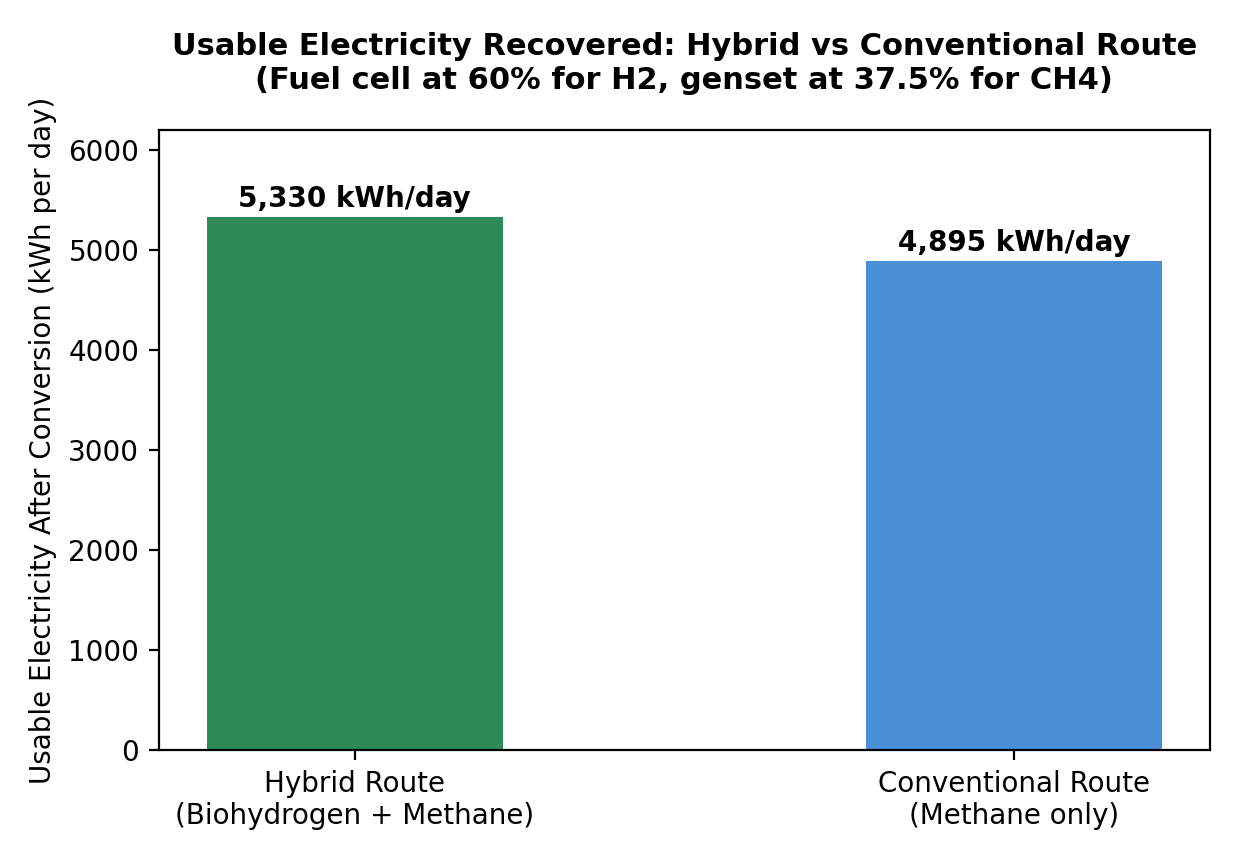
| Metric | Hybrid route | Conventional route |
| Usable electricity recovered | About 5,330 kWh per day | About 4,895 kWh per day |
| Assumed grid emission factor | 0.75 kg CO2 per kWh (illustrative) | 0.75 kg CO2 per kWh (illustrative) |
| Grid emissions avoided | About 4.0 tonnes CO2 per day | About 3.7 tonnes CO2 per day |
| Avoided emissions per year | About 1,460 tonnes CO2 per year | About 1,350 tonnes CO2 per year |
In this example, the hybrid process avoids approximately 110 additional tonnes of CO2 each year compared with a conventional methane only plant, an improvement of roughly 8 to 9 %, achieved solely because hydrogen converts its energy into electricity more efficiently.
9. Capex and Opex, the Added Cost Over Conventional Biomethanation
Adding hydrogen recovery is not free. The fair way to look at the cost is as an addition on top of a conventional biomethanation only plant of the same COD handling capacity, since the UASB and aerobic polishing stages a plant needs anyway do not go away.
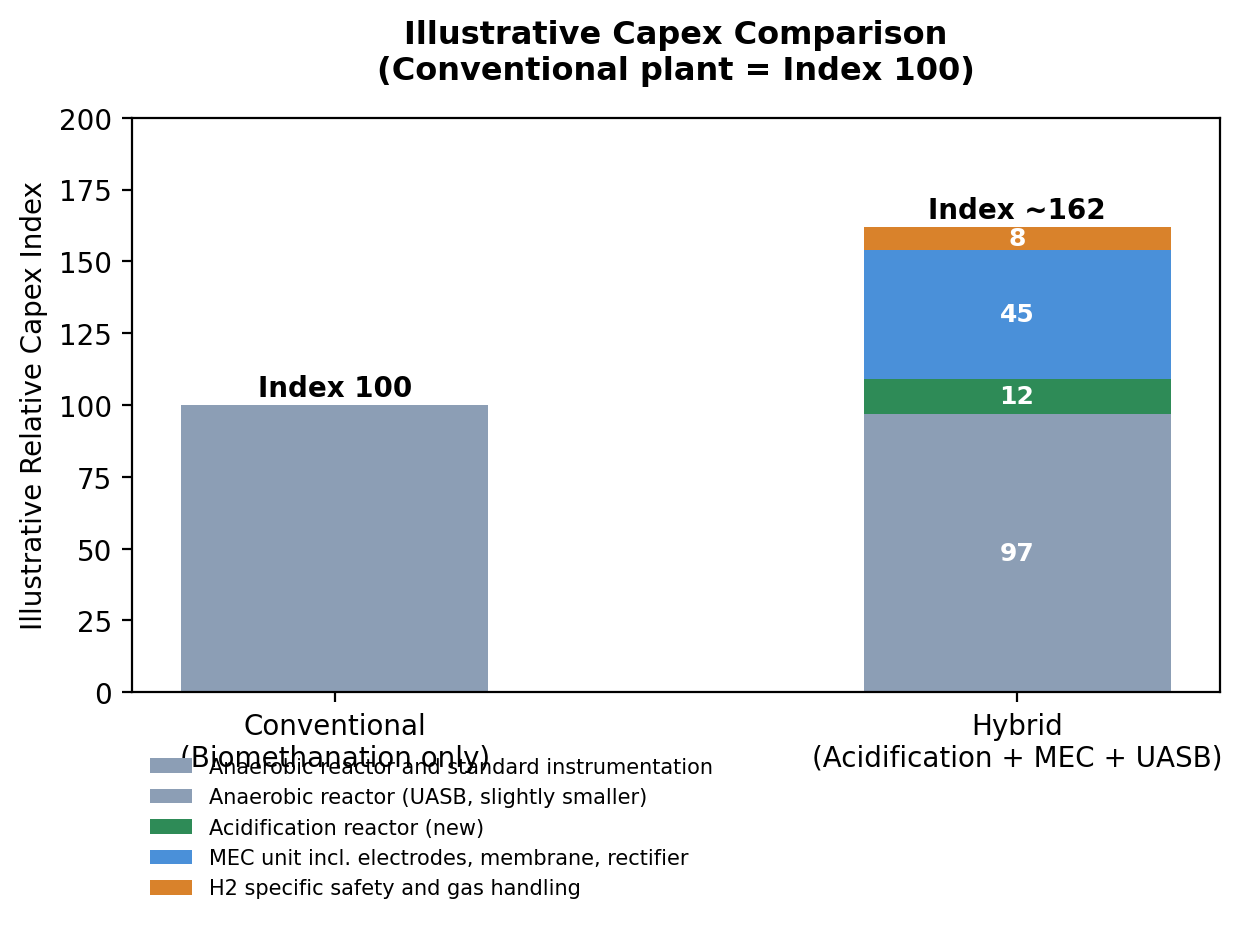
Using an indicative cost index, if the capital cost of a conventional biomethanation plant is taken as 100, the hybrid process typically falls between 160 and 170. Most of this increase comes from the microbial electrolysis cell, currently the most expensive part of the system. The acidification reactor uses conventional biological reactor technology and adds only a moderate cost, and hydrogen handling equipment such as gas detectors and dedicated piping contributes a relatively small additional investment. The UASB reactor may even be slightly smaller, since it receives a lower organic load after the hydrogen recovery stages.
Operating Cost (Opex)
The increase in operating cost is relatively modest compared with the increase in capital investment. The MEC needs a small electrical input to operate, low compared with conventional water electrolysis. The main operating cost uncertainty is electrode replacement, with a service life of roughly 3 to 5 years depending on operating conditions and electrode materials. The hybrid process is also more complex to operate, since it combines biological and electrochemical systems.
| Cost item | Conventional plant | Hybrid plant | Notes |
| Anaerobic reactor capex | Baseline (Index 100) | Slightly lower, since it handles less COD | UASB sized for residual COD only |
| Acidification reactor capex | Not applicable | Additional, illustratively 10 to 15 % of baseline | New unit, conventional reactor technology |
| MEC capex | Not applicable | Additional, illustratively 40 to 50 % of baseline | Dominant cost driver, expected to fall as the technology matures |
| Hydrogen safety and instrumentation capex | Standard biogas safety only | Additional, illustratively 6 to 10 % of baseline | Dedicated H2 detection, ventilation, segregated gas lines |
| Electricity opex | Baseline pumping and mixing load | Additional, roughly 450 kWh per day for the MEC in the worked example | Small compared with the capex impact |
| Electrode replacement opex | Not applicable | Recurring, typically every 3 to 5 years | Biggest source of opex uncertainty today |
| Operating complexity | One biological stage to manage | Three stages, biological and electrochemical, to monitor and balance | Calls for more skilled operator attention |
These figures are order of magnitude estimates meant to show where the added cost concentrates and how it is distributed, not a substitute for vendor quotations or a detailed project report. The largest cost component today is the MEC. As the technology matures, several factors are expected to reduce its cost:
- Lower cost electrode materials
- Improved manufacturing methods
- Higher production volumes
- Longer electrode life
- Better reactor designs
A similar trend has already been seen in case of many other technologies (e.g. Solar PV), where equipment costs have fallen significantly as the market has grown. Similar reductions are expected for MEC technology, but they have not yet been achieved at full commercial scale.
10. Hydrogen Handling, Safety Compared with Methane
Hydrogen is often described as a hazardous gas. A more accurate statement is that it presents different hazards from methane and therefore requires different engineering controls. Hydrogen can be handled safely, but only if the plant is designed specifically for its properties.
| Parameter | Hydrogen | Methane / biogas |
| Flammable range in air | About 4 to 75 % by volume, a very wide window | About 5 to 15 % by volume, a narrower window |
| Minimum ignition energy | About 0.017 millijoules, ignites very easily | About 0.28 millijoules, roughly 15 times higher |
| Flame visibility | Nearly invisible in daylight, harder to spot in an incident | Visible orange flame |
| Buoyancy and dispersion | Very light, rises and disperses fast outdoors, but can pool in ceiling pockets indoors | Also lighter than air, disperses somewhat more slowly, well understood in biogas practice |
| Natural odour for leak warning | None, needs dedicated hydrogen sensors | Biogas commonly carries a natural sulphide smell that gives early warning |
| Material compatibility | Can embrittle certain metals over long exposure, needs compatible piping and seals | No embrittlement concern, standard biogas materials are fine |
| Typical handling pressure | Often needs compression for storage or fuel cell use | Usually handled at low pressure, or moderately compressed if upgraded to CNG grade |
In practice this means the acidification and MEC stages need dedicated hydrogen gas detectors, distinct from the combustible gas detectors already used for biogas, along with good ventilation, flame arrestors, and gas lines kept separate from the methane lines until they reach a common utilisation point. None of this is exotic, the hydrogen and chemical process industries have decades of established practice for handling hydrogen safely, but it is a real addition to both the capex and the operating discipline of the plant, and it belongs squarely in the cost picture above rather than being treated as a minor afterthought.
11. Commercial Potential of Biohydrogen from Wastewater
Recovering hydrogen from wastewater offers a way to increase the value obtained from the same organic load. Instead of producing only methane, the plant can produce both hydrogen and methane, two marketable energy products from a single feedstock.
The technology should not be viewed as a replacement for conventional anaerobic digestion. It is an enhancement that adds hydrogen recovery while retaining the proven methane production process and the existing wastewater treatment train. The main benefits of the hybrid process are summarised below.
11.1 Two Energy Products from the Same Wastewater
A conventional anaerobic plant converts organic matter primarily into methane. The hybrid process converts part of the organic matter into hydrogen while the remaining COD continues to produce methane. This provides two potential revenue streams from the same wastewater and lets plant operators respond to changing energy prices and market demand.
11.2 Higher Value Energy Output
Although the hybrid process recovers slightly less total energy than a methane only system, hydrogen is a higher value energy carrier. Used in fuel cells, it converts chemical energy into electricity much more efficiently than methane fired generators, so the plant can produce more usable electricity from the same wastewater, improving overall energy utilisation.
11.3 Low External Energy Requirement
Unlike conventional water electrolysis, wastewater derived biohydrogen needs little external electricity. Dark fermentation uses only the energy already stored in the wastewater, and the MEC requires only a small electrical input, since most of the energy needed to produce hydrogen also comes from the wastewater. This significantly improves the overall energy balance of the process.
11.4 Minimal Impact on Existing Treatment Infrastructure
The hybrid process does not replace the existing wastewater treatment system. Instead, it introduces an additional hydrogen recovery stage ahead of the conventional UASB reactor. This means:
- Wastewater treatment performance is maintained
- Final effluent quality remains unchanged
- Existing biological treatment experience can still be used
- The technical risk of implementation is reduced
11.5 Growing Hydrogen Market
Demand for low carbon hydrogen is increasing worldwide. Potential applications include:
- Fuel cells
- Industrial heating
- Ammonia production
- Methanol production
- Refinery operations
- Steel manufacturing
- Hydrogen blending into natural gas networks where regulations permit
For facilities located close to hydrogen users, biohydrogen may become a valuable additional product rather than simply another source of electricity.
11.6 Current Limitations
Although the concept is technically sound, it should be presented realistically. Today, hybrid hydrogen recovery remains an emerging technology rather than a fully established commercial solution, and several challenges still need to be addressed before widespread industrial adoption.
Technology readiness. Dark fermentation has been demonstrated at pilot scale and is reasonably well understood. Microbial electrolysis cells, however, are still at the laboratory and pilot scale for most industrial wastewater applications, and large commercial installations remain limited.
Capital cost. The MEC currently represents the largest additional investment. Costs are expected to fall as manufacturing volumes increase and electrode technology improves, but current capital costs remain higher than those of conventional biomethanation.
Electrode life. Long term electrode durability remains one of the largest technical uncertainties. Industrial experience over many years of continuous operation is still limited, and improving electrode life will be essential for reducing operating costs and improving project economics.
Process complexity. The hybrid system combines biological and electrochemical processes. Compared with a conventional anaerobic digester, it requires:
- Additional instrumentation
- Closer process monitoring
- More sophisticated control systems
- Better trained operators
11.7 Overall Assessment
Based on current knowledge, the hybrid acidification, MEC, and UASB process represents a technically credible method of producing both hydrogen and methane from wastewater. Compared with conventional biomethanation, it offers:
- An additional renewable energy product
- Higher electricity recovery through fuel cells
- Greater flexibility in energy utilisation
- Improved fossil fuel displacement
- Access to emerging hydrogen markets
However, the technology has not yet reached the level of commercial maturity achieved by conventional anaerobic digestion.
12. Final Conclusion
Wastewater should no longer be viewed solely as a waste requiring treatment. It is also a valuable source of renewable energy and recoverable resources. Conventional anaerobic digestion has already shown how wastewater can produce methane and offset fossil fuel use. The addition of biohydrogen recovery extends this idea by generating a second, higher value energy product while preserving the proven treatment process. Although further commercial development is needed, the hybrid acidification, MEC, and UASB process offers a practical pathway toward more efficient resource recovery, greater energy flexibility, and improved sustainability.
For organisations seeking to move beyond wastewater treatment toward integrated resource recovery, biohydrogen represents a promising next step rather than a replacement for existing technology.
References
- S. Department of Energy, Hydrogen and Fuel Cell Technologies Office. Fuel Cells fact sheet and program pages, energy.gov/eere/fuelcells, source used in this note for the 60 % fuel cell efficiency figure and the 33 to 35% combustion-based generation comparison.
- International Energy Agency. Global Hydrogen Review 2025, IEA, Paris, iea.org/reports/global-hydrogen-review-2025, source used in this note for global hydrogen demand and low emissions hydrogen growth figures.
- Show, K. Y., Lee, D. J., Chang, J. S. Bioreactor and process design for biohydrogen production. Bioresource Technology, 2011.
- Logan, B. E., Call, D., Cheng, S., et al. Microbial electrolysis cells for high yield hydrogen gas production from organic matter. Environmental Science and Technology, 2008.
- Kadier, A., Simayi, Y., Abdeshahian, P., et al. A comprehensive review of microbial electrolysis cells as a platform technology for hydrogen production and wastewater treatment. Alexandria Engineering Journal, 2016.
- Guo, X. M., Trably, E., Latrille, E., et al. Hydrogen production from agricultural waste by dark fermentation, a review. International Journal of Hydrogen Energy, 2010.
- Cheng, S., Logan, B. E. Sustainable and efficient biohydrogen production via electrohydrogenesis. Proceedings of the National Academy of Sciences, 2007.
- Kothari, R., Singh, D. P., Tyagi, V. V., Tyagi, S. K. Fermentative hydrogen production, an alternative clean energy source. Renewable and Sustainable Energy Reviews, 2012.
- Central Electricity Authority, Government of India. CO2 Baseline Database for the Indian Power Sector, User Guide, latest edition.
- Intergovernmental Panel on Climate Change. Guidelines for National Greenhouse Gas Inventories, treatment of biogenic carbon.
- Metcalf and Eddy, revised by Tchobanoglous, G., Stensel, H. D., Tsuchihashi, R., Burton, F. Wastewater Engineering, Treatment and Resource Recovery. McGraw Hill.
- National Fire Protection Association. NFPA 2, Hydrogen Technologies Code, guidance on hydrogen flammability and safe handling.
Figures used in the worked example are illustrative, built from typical ranges reported in the literature above, and are meant to show the shape of the mass and energy balance rather than to substitute for site specific testing.